Royal Finance
Hybrid AI chatbot for a loan broker: 30+ products, three-agent architecture, deterministic matching
Royal Finance is one of Moscow's longest-running loan brokers, working with 14 banking partners across 30+ credit products. Ksentra built a hybrid AI chatbot that automated 60-70% of routine inquiries while ensuring accurate product matching with no hallucinations and full control over client data.
Categories: AI Chat Bots, CRM, SEO, SMM, Websites
Client:Royal Finance
AI Chatbot
A hybrid chatbot built on a three-agent architecture: deterministic rules for client qualification and product matching, AI for natural language understanding and knowledge base Q&A. 85% of interactions are handled without calling a language model.
Development
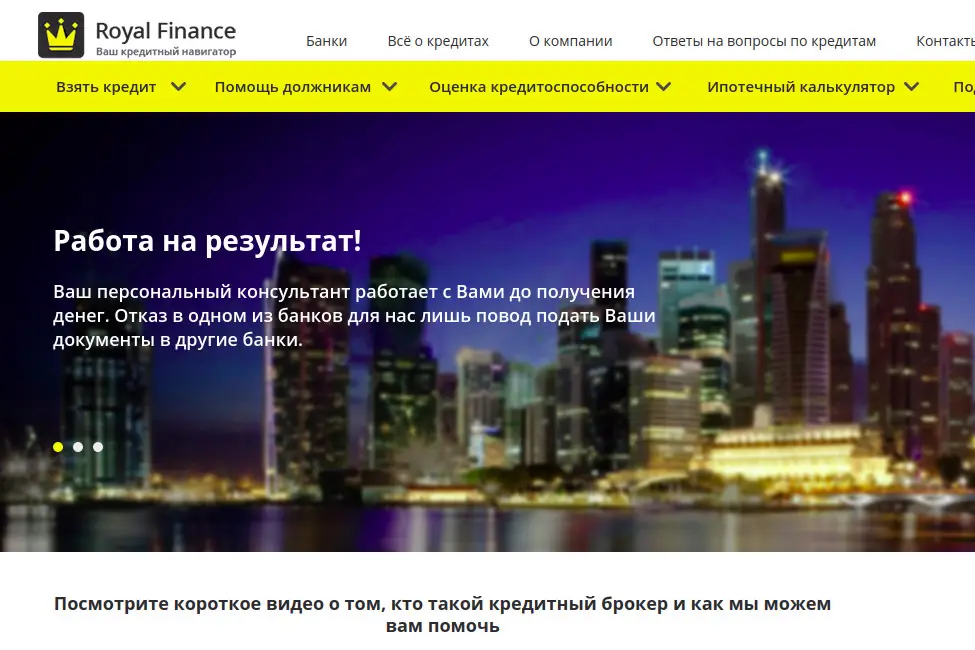
The royalfinance.ru website runs on NetCat CMS with a catalog of 30+ credit products. The chatbot syncs product data directly from the CMS — rates and terms are always up to date without manual updates.
SEO
Ongoing search engine optimization brought the site to top positions for credit-related queries. 130+ blog articles became the knowledge base for the chatbot's RAG pipeline — content works for both SEO and automation.
Advertising
Operating in the credit consulting sector, Royal Finance often competes for the same audience as banks, which hold significantly larger advertising budgets. This requires clear differentiation: positioning ourselves apart from banks on one side, and from "high-risk" clients on the other—those who no longer qualify for bank loans. We rely exclusively on search advertising, utilizing anti-click fraud technologies to protect our budget.
SMM
While social media are not direct acquisition channels, they play a vital supporting role in brand building, amplifying the reach of website content and video. The Facebook group has over 10,000 followers, while the Telegram channel was recently launched and is just beginning to grow its audience.
Video
The launch of our dedicated video channel was a spontaneous decision following several TV interviews. Today, the YouTube channel features over 40 videos. This content not only bolsters our corporate reputation and sets us apart from the many scammers in the financial sector but also helps explain the complexities of lending and attract high-intent clients.
Mailing
The project utilizes two types of mailings: bulk and transactional. Bulk emails help boost the popularity of new content, such as website articles and videos. Transactional emails keep clients informed about the status of their loan applications. We use MailChimp for all mailings, with data synced directly from the CRM via an interface.
CRM
The system consolidates all incoming leads and manages the entire processing workflow. Lifecycle data is fed into the RoiStat end-to-end analytics platform and other systems. Built on self-hosted SuiteCRM, the architecture minimizes data breach risks while offering seamless integration with external tools to capture leads and provide real-time status updates throughout their journey.
Analytics
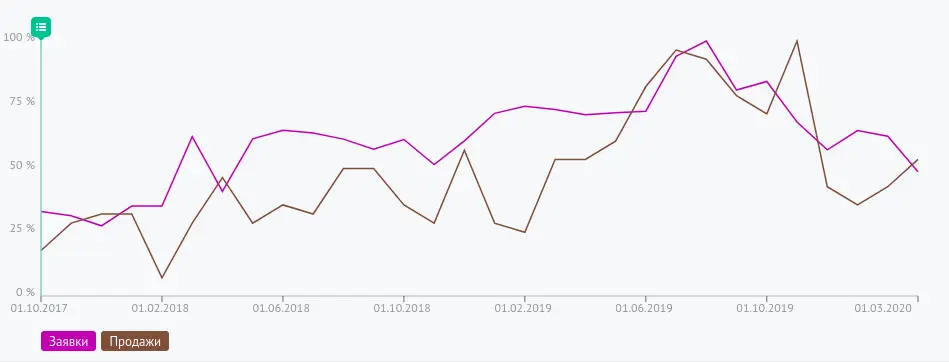
End-to-end analytics via RoiStat, CRM based on SuiteCRM hosted on the client's own server — full data control in compliance with Russian data protection regulations.
The Challenge
Royal Finance came to Ksentra with a challenge common to fintech companies: automate incoming inquiry handling without sacrificing consultation quality. Royal Finance is a loan broker that matches individuals and businesses with credit products from a pool of partners. Their catalog: 30+ products from 14 partners (banks, microfinance organizations, leasing companies) across 15 categories — mortgages, consumer loans, auto loans, credit cards, business loans, leasing, and factoring.
Operators spent most of their time on repetitive questions that followed the same decision tree. To match a client with the right product, you need to collect information in a strict order:
- Individual or business entity?
- What type of product do they need?
- What amount?
- What's their credit history?
- What's their employment status?
Skip any of these steps and the match will be wrong. This isn't a job for a standard chatbot.
Case result: 60-70% reduction in operator workload, 85% of interactions handled without calling AI, full data control on client infrastructure.
Why SaaS Platforms Didn't Work
We evaluated the market: Jivo, Aimylogic, BotHelp, Bitrix24, and international platforms like Intercom and Drift. The problem wasn't pricing — it was functionality:
- Can't enforce a strict question sequence. An LLM-based bot will skip steps, ask in the wrong order, or confidently recommend a product the client doesn't qualify for
- Matching across 30+ products with multiple parameters — no visual bot builder supports this logic out of the box
- Client data can't leave the premises — Russian data protection law (152-FZ), financial information, credit history
- The product catalog changes monthly — rates, terms, new partners. Manually updating the bot with every change doesn't scale
Why a "$50 Prompt Bot" Doesn't Cut It
The freelance market offers "AI chatbots" for $50–150: a system prompt plus Chatbase or similar. For simple FAQ, that works. For financial consultations, it doesn't:
- Hallucinations. A language model doesn't know what it doesn't know. For financial services, that means fabricated rates, nonexistent terms, or disclosure requirement violations
- Prompt constraints aren't absolute. By various estimates, system prompt instructions are followed 90–95% of the time. At 10,000 conversations per month, that's 500–1,000 violations
- Can't enforce business logic. There's no way to make an LLM always ask questions in a specific order through prompting alone
The Solution: Hybrid Architecture
The Ksentra team designed a custom AI chatbot that combines deterministic logic with language model capabilities. The core idea: use code where code is reliable; use AI where code isn't enough.
Deterministic Core
The foundation is a conversation graph: a tree of nodes where each node has a type (question, information, contact collection, product matching). Each quick-reply button leads to a specific child node. The tree encodes business logic: product type → amount → credit history → match.
This path is always followed. AI can't skip steps or improvise the flow.
In production traffic, 85% of user inputs are handled by deterministic rules with zero language model costs.
Three Specialized Agents
When a user types something the pattern matcher can't handle, three AI agents work together:
The Orchestrator classifies user intent: are they answering the current question, asking their own, or both? Based on the classification, it routes to the right specialized agent.
The Parser handles semantic matching. A user types "three million" instead of tapping the "2–5M" button — the parser maps free text to the correct option. Results are cached — the same phrasing doesn't cost twice.
The Info Agent answers informational questions through a RAG pipeline over 130+ company blog articles. "What documents do I need for a mortgage?" — knowledge base search, then answer synthesis based on real content. No fabricated details. Learn more about how AI transforms business processes in our AI strategy guide.
Why three agents instead of one: each has its own caching strategy, its own failure modes, and the ability to use the most appropriate model. A parser failure doesn't block the info agent. They can run in parallel.
Product Sync
A daily job reads the catalog from the company's CMS (NetCat on MySQL), transforms products into a normalized schema, updates by ID, and deactivates removed entries. When the company adds a partner or a rate changes, the chatbot picks up the changes by morning. No manual work.
Product matching is fully deterministic: filtering by type, amount, credit history, employment. No AI involved. Rates and terms are guaranteed accurate — pulled straight from the database.
Multi-Channel
The same engine powers both the web widget and the Telegram bot. A user can start a conversation on the website and continue in Telegram — the session transfers with all data preserved.
Technology Stack
| Component | Technology |
|---|---|
| Backend | Django (Python) |
| Database | PostgreSQL + pgvector |
| Language Model (RU) | YandexGPT Pro |
| Vector Search | pgvector (inside PostgreSQL) |
| Channels | Web Widget + Telegram Bot |
| CMS Source | NetCat (MySQL) |
| Hosting | Client's VPS |
Results
- 60–70% reduction in operator workload — the bot handles most routine inquiries autonomously
- Accurate product matching — rates and terms come from the database, not generated by a language model
- Full data control — the system runs on the client's infrastructure, no data leaves for third-party servers
- Automatic catalog updates — daily sync from CMS, no manual maintenance
- Multi-channel — single bot for website and Telegram with session transfer
Want similar results for your business? Let's discuss automation
The hybrid approach isn't limited to fintech — the same architecture works for e-commerce, logistics, B2B sales, and any business with a complex product or service catalog. See more Ksentra projects in our case studies.
The Key Advantage of the Hybrid Approach
The hybrid architecture solved a problem that neither SaaS platforms nor a pure AI chatbot can: it delivered accuracy where errors are unacceptable and natural conversation where it matters for the customer experience.
Product matching and client qualification are deterministic and verifiable. Knowledge base answers are grounded in the company's published content. API costs are optimized through caching and agent specialization.